Tuesday, May 1, 2012

Perfect Hash Browns


THE BEST HASH BROWNS
There is an art to making the perfect hash browns AND they must be crispy, fat free is just not an option. Served smothered in homemade green chile sauce and with my special recipe scrambled tofu, you've got all the protein and nutrient bases covered.  

serves 2-3
2 medium whole Russet or Yukon Gold Potatoes
1 green onion minced
3T Olive oil, Safflower oil, or Coconut oil
sea salt and fresh cracked pepper

Steam potatoes for 10-15 minutes. Potatoes should not be overcooked, they should be slightly undercooked so that they can be grated with a cheesegrater without falling apart.
Heat a skillet over medium heat, add oil of choice to heat up as well. The best skillet is an Iron skillet. An iron skillet makes the crispiest potatoes- nothing compares.Teflon is just gross and toxic, and thin saute pans don't crisp the potatoes as well.
Grate potatoes with a cheese grater.
Add potatoes to heated oiled skillet in a thin layer. Top with green onions and add sea salt and pepper to taste. Cook until bottom of potatoes is crispy- about 5 minutes. Flip once and crisp the other side and cook until this side is crispy.
The trick with perfect hash browns is to let each side get fully cooked and crispy. Don't stir them or bother them at any time. Let them sit and do their crispy magic. They should only need to be flipped once.

Preparation and Roasting of Peppers


PREPARATION AND ROASTING OF PEPPERS
 Place Chiles over a gas flame or on a BBQ grill and roast until the skin is burnt. Alternatively, chiles can be placed in an over or the broiler @ 450 degrees. Make sure to rotate chiles so all sides are roasted. Place in a plastic bag after roasting for 20 minutes or so which helps the skin to come off. The final step is to carefully peel off the skins. Doing this under running cold water is helpful and it is OK if all of the skin is not removed. Make a small slit in chile and clean out all seeds. Be very carefully when handling the chiles so as not to tear the chiles flesh. Leave the stems on them as well. Peppers prepared correctly have on slit for stuffing the filling and no seeds and few skin left on the flesh.

Entrees

Garlic Mashers and Cheddar Stuffed Poblano Relleno in a Tomatillo Basil Cream Sauce

From the Blog archive: The Joy of Cooking en Mexico


POBLANOS RELLENOS IN TOMATILLO BASIL CREAM SAUCE
 The richness of freshly roasted Poblano Chile combines lusciously with a tangy cream sauce creating a unique dish of global fusion flavors. Begin this recipe by preparing every separate recipe first. It is possible to multitask and do them all around the same time. Once the sauce, filling, and poblanos are prepared follow these steps to putting everything together. 

5oz sliced cheddar
1 recipe Mashed Garlic Potatoes
1 recipe Tomatillo Cream Sauce
Pomegranate Seed, Pistachios, and Fresh Mint Garnish

Very carefully, stuff Poblanos with cheddar cheese and about 1/2 cup of potato filling for each poblano. Put tomatillo cream sauce into a medium sized saucepan, then place poblanos, slit side up, into the saucepan. It is Ok if they are crowded together. Cook for 10 minutes, covered, over a medium low heat. Serve Poblanos over Coconut Hibiscus Rice with fresh Avocado and salad.

!BUEN PROVECHO!


TOMATILLO BASIL CREAM SAUCE
This is an amazing sauce that can be used in various ways. It makes an excellent enchilada sauce or can be smothered over breakfast potatoes and eggs. It can be sauteed with vegetables and shrimp for a mexican fusion seafood dish served over rice.


15 tomatillos, husked and cleaned
2 cloves garlic
1 small spring onion with onion greens
1/4c each fresh basil and fresh cilantro
2t sea salt
2T sour cream

Cook tomatillos in boiling water for 5-7 minutes- just until they turn a lighter shade of green. Be careful to not let them overcook which turns them into a yellowish brown color. Place cooked tomatillos in blender with all other ingredients and puree. Cook over low heat for 5 minutes in small saucepan.
GARLIC MASHED POTATO FILLING
A simple, yet versatile filling for more than just Poblanos Rellenos. Try as a filling for enchiladas or Flautas as well.

3 medium sized potatoes, peeled
2 cloves garlic, minced
1 small spring onion and onion greens, minced
1T olive oil
2t sea salt
1/2t black pepper
2T sour cream

Boil or steam potatoes until mushy- about 20 minutes. In small saucepan, saute onions and garlic in olive oil  for 2-3 minutes until lightly browned. Turn off heat. Place potatoes, garlic, onions, sea salt, pepper and sour cream in a bowl and mash until creamy.


Tuesday, April 17, 2012

EAT YO GREENS! Happy Spingtime Cooking with Dark, Leafy Vegetables


           While a cruise through ones' local  farmers’ market is splendid on the eyes and taste buds, it can be overwhelming for even the experienced chef. The standard American diet and cooking style isn’t known for incorporating these lesser-known vegetables. Kale, a prolific growing vegetable in mountainous regions, is a dark green leafy vegetable that is incredibly healthy. It is one of the first vegetables to show up in the garden and the last to die, often living after snow falls. Swiss chard is another leafy green that loves the cool nights and short growing season of southwest Colorado. Greens, as in garlic greens, garlic scapes, spring onion greens, beet greens, turnip greens, braising mix, chard, kale, spinach and bok choy, are offered abundantly at the farmers’ market the entire growing season. The classic way to prepare garden greens is a simple sauté with garlic, olive oil, and a splash of tamari or soy sauce. Substituting kale or chard for spinach in recipes is a great way to try out the various flavors of garden greens as well.


SWISS CHARD, SPINACH AND SEITAN TAQUITOS
served with avocado creme and guajillo chile tomatillo sauce

These taquitos are a healthy way to get one’s taco stand fix. They are savory and highly addictive! This recipe is a great way to use Farmer’s Market spring offerings but adjustments can be made for all year round.

3 cups finely chopped Swiss Chard and Spinach 
1 clove garlic minced
1 small spring onion with onion greens (1/4 cup chopped leek or yellow onion can substituted)
1/3c garlic greens chopped (optional- available in spring at Farmers’ markets)
1 cup chopped Seitan*
2-3t Tamari
10 corn tortillas
1T oil
1 recipe Avocado Sauce (recipe follows)
1 recipe Guajillo Tomatillo Salsa or salsa of choice
1 cup shredded green leaf lettuce and/or cabbage
2 diced romas tomatoes
1/2 cup shredded jack cheese 

Preheat oven to 400 degrees. Saute all greens, garlic, onion together in oil. Season with Tamari to taste. Cook until greens have shrunk and are fully cooked, about 5 minutes. To assemble: first, soften tortillas so that they are pliable to work with. To soften heat gently both sides of a tortilla in a lightly oiled skilled. Repeat with all tortillas. Place 2 T of filling on tortilla. Filling should be placed in a line on bottom 1/3 of tortilla. Then roll up the tortilla tightly around filling. Place taquito seam side down on baking sheet. Continue with until all taquitos are made and bake for 20-25 minutes, or until crispy. Place all taquitos on large plate and garnish with shredded lettuce and/or cabbage, shredded cheese, and diced romas.

 *Seitan is a high protein vegetarian food made from wheat gluten. It has a meaty, chewy texture which is why it is a great ingredient to use in place of meat.

 Taquito filling saute, Preparation of tomatillos and tortillas, Rolling of taquitos


Guajillo Tomatillo Salsa and Avocado Creme

Avocado Creme
Fresh juice from ½ a lemon
1-2 T water
1 Avocado
½ sea salt

Puree in food processor or blender till smooth. Add enough water so it has a good dipping consistency.


Guajillo Tomatillo Salsa
Boil 3lbs Tomatillos, husked, for 5 minutes or just until their color changes slightly. Don't overcook. Take them out of water and place into blender.

Meanwhile, place the following ingredients in dry iron skillet over medium high heat:
2 cloves garlic
1/4 cup sliced yellow onion or spring onion
4 arbol chiles
3 Guajillo Chiles with seeds and stems removed

Stir frequently until all ingredients are lightly toasted, about 4-6 minutes. Put chile mixture in blender along with prepared tomatillos. Blend on high for 2-3 minutes until mixture resembles a smooth, taco stand salsa.


Sunday, April 1, 2012

A Winter of Soups, A Parsnip Infatuation, and Heartbreak

Root Vegetable and Roasted Poblano Corn Chowder

            It has been officially 10 months since I've blogged. This is absolutely ridiculous considering my zealous cooking nature. Oh what a crazy 10 months it has been! A Fall season of  unabashed love and a winter of  deep illuminating heartbreak brought me to my kitchen in happiness and despair. As always, the vegetables and spices awaited me with their comfort and familiarity. Dependable to soothe me through whatever avails as my kitchen knife cuts and dices away all of lifes' frustrations. It was a winter of soups. Soup is such a universal food in which almost all cultures cook and enjoy. The versatility and open ended creation that can take place within soup making reminds me of the possibilities inherent within our own daily lives. What have you been throwing into your personal soup pot lately, and how is it cooking up?
          The following recipe was created for my boyfriend at the time, who quickly took me into a whirlwind of relationship fervor. I gladly cooked food full of adoration and gave my heart within every stir of the soup pot. He left me as the winter snows fell heavily, but thankfully I discovered a new love quickly: the parsnip. This handsome root vegetable swept me off my feet with its' subtle sweetness and charming adaptability into my recipes. When peeled and diced, the parsnip is a tasty addition to your soups' mirepoix. The mirepoix is a french technique for starting the soup. It is traditionally a saute in the soup pot of carrots, onion, and celery with a light coat of oil or butter. When the onions get glossy, all the other soup ingredients are added. The mirepoix is the prelude to the final culmination. Experimenting with the types of oil used in the saute along with switching up the traditional vegetables takes soup making to the next dimension.

ROOT VEGETABLE AND ROASTED POBLANO CORN CHOWDER
Saute in medium saucepan the following peeled vegetables for 5-7 minutes:
1 cup diced Celery Root 
2 medium sized Parsnips diced
2 medium sized Carrots diced
1 lg. Russet Potato diced
1 sm. Sweet Potato or Yam
1/2 leek chopped
2 cloves garlic minced
3 Tbsp Virgin Sunflower or Olive oil

Add the following to vegetable mixture:
1.5 quarts filtered water* 
1Tbsp Thyme
1Tbsp Sage
1 cube good quality vegetable bouillon**

Bring soup to a boil and then reduce to a simmer. Let simmer for an hour stirring occasionally.
The next step is to puree 1/2 of the soup in a blender, leaving the other half in the soup pot as is (chunky for the chowder). Add soup puree back into the soup pot.

Add:
2 ears sweet corn shucked off of cob
2 chopped Roasted Poblanos***
1-2 Tbsp sea salt, more or less to taste
fresh ground black pepper to taste

Let soup simmer for another 30 minutes so flavors can assimilate. Take off heat and serve.

Optional:
Miso is a way to enrich the flavor of certain soups and add unami. After soup cools slightly and is off heat (so not to kill the beneficial enzymes of miso) a slurry of 2-4 Tbsp Miso mixed with warm water can be added to the soup. If this is done, reduce the amount of sea salt added before in previous step. Miso is incredibly healthy and adds a natural saltiness while deepening the soups' flavor.

*I choose to use filtered water in all of my soups and in all of my cooking. It is easy to refill a jug at ones' local grocery stores' water filtration station. Tap water is full of chemicals, chlorine, heavy metals  and  other toxins, which are ingredients I don't want in my food.

**Make sure to read all labels when searching for a good vegetable bouillon option. MSG and many other funky, unhealthful ingredients lurk in stock bases. As usual, health food stores usually carry the best option for purchase. I like the Rapunzel brand.

***Please go to my blog post The Joy of Cooking en Mexico for instructions of how to roast poblanos. 

Mirepoix for Yellow Split Pea Soup
            
          My Yellow Split Pea Soup features parsnips and leeks. The soup is finished off with 2 diced Roma Tomatoes. The tomatoes add a nice acidity which balances well with the root vegetable richness inherent in this vegetarian version of classic split pea soup. Hearty multigrain artisan bread slathered in butter is a must have accompaniment as well as 1-2 feet of snow falling outside the door.

YELLOW SPLIT PEA SOUP WITH PARSNIPS AND LEEK
Saute the following vegetables in 2 Tbsp Olive oil or Butter for 5 minutes:
1 Celery stalk diced
1 Carrot peeled and diced
1 lg. Parsnip peeled and diced
1/2 Leek chopped

Add the following:
2 Liters filtered water
2 cups Yellow Split Peas
2-3 Tbsp sea salt to taste
1 Tbsp Sage
1 Tbsp Thyme
2 diced Roma Tomatoes

Bring mixture to a boil and then reduce heat so soup simmers. Simmer for 1 1/2 hours. Take off heat and serve.

yours truly basking in the fall sunshine  kitchen queen style

ROOT VEGETABLE GREEN CHILE POSOLE 
Posole is a revered soup in the Southwest region. Coveted recipes are proudly served in this soup that features hominy corn. Hominy corn is usually purchased in its' dried, canned, or frozen form. I prefer to buy it frozen. If using dried, allow extra cooking time (i.e. hours) and add extra water to recipe. Hominy was eaten by the Natives of Mexico and Guatemala dating back to 1200 BC. Traditionally, chicken or pork, is added to the Posole. I choose to stray from tradition and add a saute of root vegetables instead. Do not use canned green chiles in this soup. One can find frozen green chile in the freezer section at most grocery stores in the southwest or at specialty hispanic food stores. Even better is to use freshly roasted green chile if available. It is important to serve the soup with a squeeze of fresh lime juice as it combines beautifully with the broth. 

Saute in medium sized thick bottomed saucepan for 5-7 minutes:
2 Tbsp Expeller Pressed Sunflower or Safflower Oil
1 sm. Parsnip diced
1 Carrot diced
1/2 stalk Celery diced
1/2 Leek chopped
1/2 cup Sweet Potato diced
1.5t Cumin seeds

Add:
6 cups filtered water
2 cups frozen or canned Hominy
20 oz frozen chopped green chile (mild or medium heat)
2-3 Tbsp Sea Salt, to taste (add 1 Tbsp at a time to taste)
1 Tbsp Oregano
2t Thyme

Bring soup to a boil and then reduce heat and let soup simmer for at least 2 hours. Take off heat and serve in bowls with recommended garnishes. Serve with heated flour tortillas.

Garnish each soup with the following:
fresh squeezed juice of 1/2 a Lime
dollop of Sour Cream
chopped Cilantro
diced Avocado


Thursday, May 19, 2011

Banana Leaf Wrapped Tamales

Roasted Poblano, Tomato, Red Pepper, Potato, and 
Fresh herb filled Tamales wrapped in Banana Leaf
Served with a Poblano Tomatillo Salsa and Caribbean Style Black Beans

I recently came home from living on the Nayarit coast of Pacific Mexico. 2 and 1/2 months of blissful recipe experimentation. I learned many new salsa techniques and my tamale making skills advanced greatly. Mexican flavors and regional ingredients combined with outright fruit and vegetable abundance placed me in 'foodie' heaven. This blog chronicles the making of savory tamales, however, I mostly made tamales 'dulces'. Sweet mango cheesecake tamales were a favorite creation. Banana leaf wrapped tamales filled with mexican chocolate and bananas with a brown sugar and mexican vanilla infused masa dough was another sweet creation. My lovely son and his father, Chef Ricardo, happily sold my tamales to tourists and locals alike. Little did they know, a red headed 'gringa' was the tamale maker!

Step by Step...
The first step is to locate a banana tree with young, pliable leaves. Bring a sharp knife and cut it off. This is me on my roof of my casita in Mexico. From my roof, I was able to reach the empty vacation rentals' banana trees next door!


Over a wood cutting board, cut the leaf off of center spine. Then, cut the large leaf into squares approx. 10x10 inches. Wash these leaf squares well.

Spread the masa into a rectangle shape.  Place filling on upper half of masa so the tamale rolls properly.

                                      
Everyone has their own style of rolling their tamales. The goal is to 'pocket' in the filling with the masa while wrapping it with the banana leaf. Roll leaf over and tuck in one side of leaf, then continue with the roll. Keep trying until you figure out your personal style of wrapping the tamale. It is more forgiving than it looks!


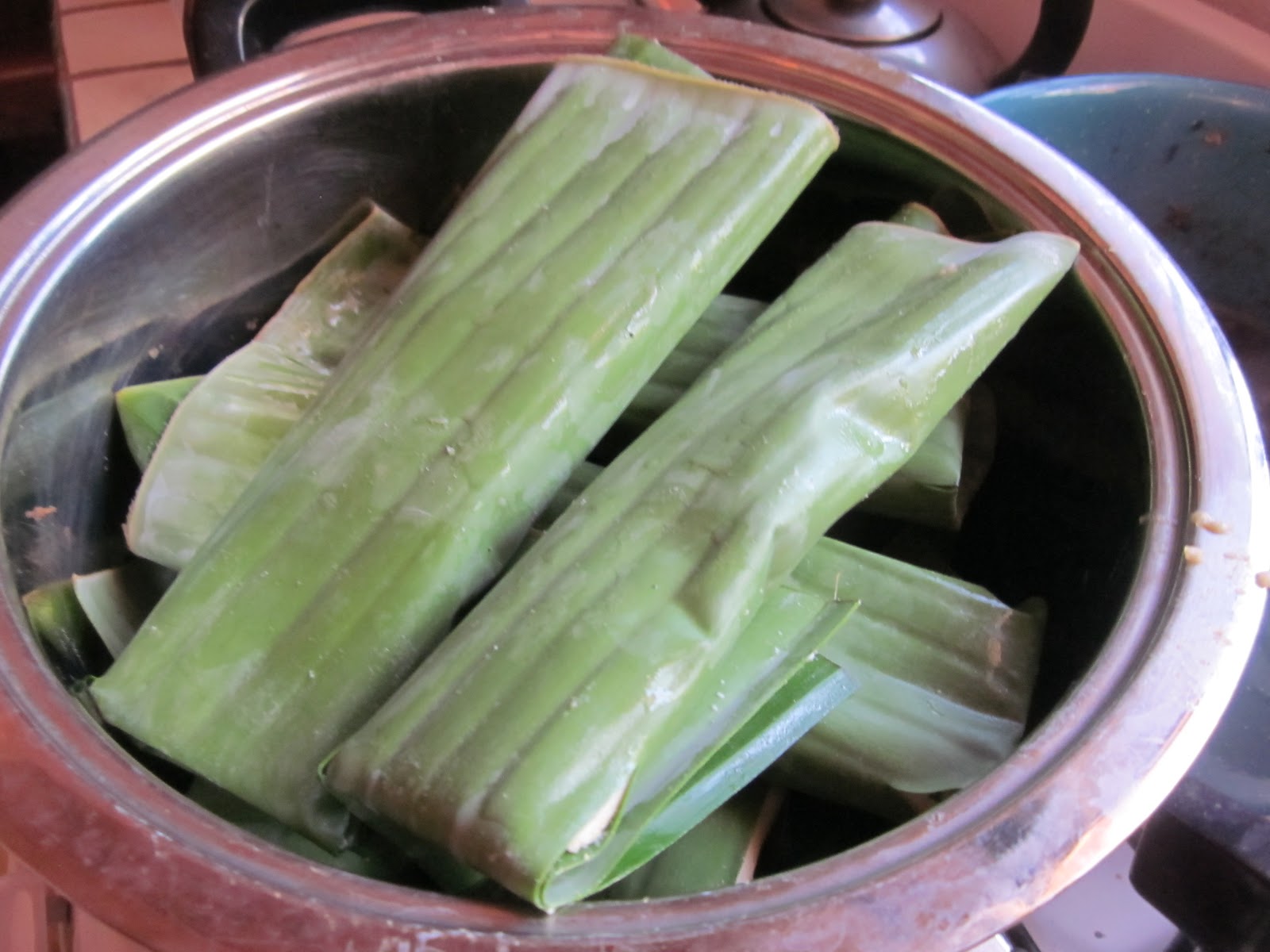
A steamer pot filled with fresh banana leaf wrapped tamales. What a glorious sight! Tamales can be placed in any style steamer pot. Do not put them over direct heat, steaming is the best way to cook them. In about 30-40 minutes, the tamales are ready to eat. Buen Provecho!

Masa
*1 kilo maseca (corn flour)
1 stick Butter
2t baking soda
2t apple cider vinegar
2T sea salt
water 

*Maseca is corn flour and is found in the mexican section of grocery stores. It is different than polenta and cornmeal. 1 Kilo equals 2.2 lbs of maseca.

Melt butter in small saucepan. In large bowl, mix maseca, baking soda, and sea salt. Add melted butter and apple cider vinegar to maseca mixture and mix roughly with large spoon. The next step is a bit tricky to explain. Just enough water needs to be added and mixed in with the maseca mixture to make a slightly sticky, yet spreadable dough. The water amount to be added fluctuates based on weather, humidity levels, etc... The goal is   a dough that has the moistness of biscuit dough. Add water 1 pint at a time, incorporating it into the maseca mixture with hands little by little until the perfect feel is achieved. At first, this may seem daunting, but with time, the feel of masa dough will be more natural.

Filling
There are endless possibilities for Tamale fillings. This is the recipe for the filling I made for the Tamales shown. 

1 roasted poblano, seeded and skinned 
1/2 red pepper, diced
2 medium sized potatoes, steamed and diced
1 ripe roma tomato, diced
1/4 yellow onion, diced
2 cloves garlic, minced
2T fresh minced basil
1T each  fresh oregano and rosemary, minced
2T spanish olive oil

Place oil in saute pan over medium high heat. Add all other filling ingredients and saute together for 3-5 minutes, until onions are glossy and the smell of garlic permeates the air.

Roasted Poblano and Tomatillo Salsa
The Poblano chile is the chile of choice on the coast of Nayarit, Mexico. When roasted, a deep and rich flavor is unleashed that can be used in a variety of ways. Please see my earlier blog article 'The Joy of Cooking en Mexico' for complete roasting and preparation instructions for Poblano Chiles. This salsa combines the earthy flavor of roasted poblano with the fresh citrus zing of tomatillos. Recipe credit goes to Chef Ricardo Barrios of Sayulita, Mexico. He taught me this recipe and my gratitude shines his way for learning this salsa.

1 roasted poblano, seeded, and skinned
8 medium sized tomatillos
1 clove garlic
1 spring onion with greens
juice of 2 limes
1/2 cup fresh cilantro
dash of cumin
dash of sea salt

Begin by husking and cleaning tomatillos. Boil them for 4-5 minutes, just until their color changes slightly. Be careful not to overcook them. In the meantime, place all other ingredients in a blender. The spring onion, called 'cebollina' in mexico, is a very small onion, but bigger than the green onions we see in the United States. They can be found at Farmer's Markets or substituted with 2 green onions. The spring onion and garlic can be roasted slightly on a comal or iron skillet, but this step is optional. Place tomatillos and all other ingredients in blender and blend till incorporated.  Delicious over everything and anything!

Caribbean Style Black Beans
This recipe is best prepared with black beans that are cooked from scratch. Canned beans can be used, however, I don't like canned beans at all. They have a tinny flavor and are hard on the digestive system. I find canned beans gross, disgusting, and lacking life force. Making beans from scratch is easiest with a Crock pot, especially recommended for cooking beans at high altitude. With a little extra effort, and planning, fresh cooked beans are a welcome staple to a healthier lifestyle.

4 cups cooked black beans
1/2 yellow onion, minced
3 cloves garlic, minced
1 red pepper, diced
1 thumb sized hunk of ginger, minced
2t dried thyme or 2T fresh thyme
2T fresh basil, opt.
2T sea salt or more to taste
2t black pepper
juice of one orange
1T olive oil

In medium sized saucepan, heat oil over medium heat. Add onion, garlic, and red pepper and saute until onions turn glossy. Add beans and just enough water to cover beans. Add all other ingredients and let simmer for at least 30 minutes so flavors fully infuse. 


ENJOY!